Customer success story
A company built on real-time data, with its own data in silos
idem telematics has gateways in around 50,000 trailers, making it the largest player in Europe. Its whole product is moving data from a moving vehicle to a back office in real time. Its own sales team, meanwhile, was struggling to find out what a customer had bought. Rapidi connected Salesforce to Microsoft Dynamics NAV in about two weeks.
idem telematics builds hardware and software that make a truck and its trailer behave as one integrated network rather than two vehicles joined by a fifth wheel. The company wanted to sell better to both fleet operators and rig manufacturers, and was held back by internal data silos. It rejected three alternatives before choosing Rapidi, went live in about two weeks, then spent a year making small improvements while the system was already in production.
Talk to an integration expert
We are a satisfied user of Rapidi. Our past sales data and statistics are always up to date so our team can concentrate on selling. They are no longer struggling to get the data they need.
What the company actually does
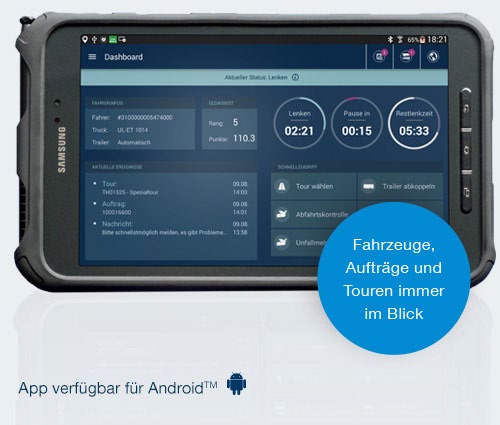
idem telematics would like you to know that the truck and trailer you pass on the autobahn is not old technology. Trucks and trailers monitoring their own performance and reporting it in real time is not new in itself. What is newer is the pair working as a single, fully integrated network of hardware and software rather than as two things bolted together.
On a European motorway the odds are decent that you are looking at one. idem telematics gateways are installed in roughly 50,000 trailers, which makes the company the largest player on the continent.
In its own description, idem telematics is one of the leading manufacturers of telematics systems for the precise control of mobile units and their integration into the business processes of forward-looking transport and logistics companies.
Which makes the internal problem faintly ironic. “We wanted to improve our sales process, both to fleet operators and to the manufacturers of rigs, but were hampered by the data silos within our company,” says Thomas Eiglsperger, responsible for internal and international sales. “We started looking for a way to integrate our sales data in Salesforce with our Microsoft Dynamics NAV and eventually found Rapidi.”
Three things they tried first
The sales team needed past sales history out of NAV, and needed new sales information to land in NAV quickly and accurately. Three approaches were considered and set aside.
Web access to NAV for the sales team. This was actually implemented. It did not help: two different user interfaces meant the team was still losing time hunting for information.
Replacing Salesforce with Dynamics CRM. Tempting on paper, since it would have put everything in one vendor’s stack. Rejected because the sales team was genuinely benefiting from Salesforce, the switch would have been disruptive, and useful capabilities would have been lost.
A one-time integration built by a software vendor. Expensive, and with a structural flaw: a major Salesforce or NAV update would probably mean paying for the work again.
Cost was not the major issue, it was always more a question of data quality. Our systems are designed to keep our customers’ fleets moving and improve their logistics through the real-time transmission of data to their back office systems. We wanted to do the same for our sales team — make sure they had information at their fingertips that was up to date and, just as importantly, accurate.
When they found Rapidi they thought it was a far better fit, subject to two conditions: that it could be implemented quickly, and that it worked as advertised.
Take it with you
The whole story as a PDF
Five pages: the data silos inside a real-time data company, the three alternatives they rejected, the two-week start, and Thomas Eiglsperger in his own words. Yours after one short form.
Two weeks, then a year of small things
The idem telematics team worked intensively with Rapidi consultants for about two weeks to get the integration running. That is the headline number, but the year that followed is the more honest description of how this kind of project actually goes.
With the system already in production, they spent the next twelve months on improvements as they got to know the product better. “It was minor work,” Eiglsperger says, “but important for us to get the most out of the system. We were pleased that whenever we had a new idea, the Rapidi consultants found time to work with us to implement it.”

Rapidi had so much experience, and always had tips and suggestions for us. We were very, very satisfied with the support we received.
What changed
The sales team can now tell a customer the status of a system being integrated at the factory. For a communications company, that is the point: they finally get sales value out of information they were already gathering in the field.
Eiglsperger noticed a subtler change too. The way the team worked shifted, because they trusted what they were seeing in Salesforce. Accurate data does not just answer questions faster; it changes which questions people bother to ask.
The work is not finished. Salesforce Lightning is coming, and with it stronger reporting, which will need more fields transferred and therefore more integration. Having been through it once, he expects that to be smooth rather than stressful.
His advice, which is unusually specific
Eiglsperger suggests spending a day with your sales team and, as a group, defining and ranking what actually matters to integrate. Then give someone who knows both systems — Salesforce and the ERP — the job of sketching the integration and migration strategy, and work with Rapidi consultants to check the plan is sound.
“If you do this, you will get the benefits of your new integrations more quickly and with less headaches.”
Asked about going back, he pauses. “I can’t even think about that, I’m so used to having accurate and timely data always in front of me. We are definitely a happy customer.”
Web access to the ERP that did not fix anything?
Tell us what your sales team still cannot see and which systems hold it, and we will tell you whether a standard Rapidi template covers you.