Customer success story
Nineteen ERP companies, one CRM
QlikTech sells software that lets people explore their own data freely. Internally it had the opposite problem: customer data spread across nineteen separate Microsoft Dynamics NAV companies, and four hundred Salesforce users who needed to see it. The integration had to hold that together while the business kept growing, without handing the sales team an ERP licence.
QlikTech runs Microsoft Dynamics NAV as its ERP and Salesforce as its CRM. Rapidi has joined the two since early 2009, when there were around ten NAV companies; today there are nineteen, feeding one Salesforce organisation with 400 users. Accounts, credit status and balance, licence data and invoice numbers flow from NAV into Salesforce; won opportunities go the other way immediately. The first build was tested and rolled out within two weeks.
Talk to an integration expert
Nineteen companies, one view
A fast-growing software company accumulates legal entities. Each one gets its own NAV company, each company holds its own customers and invoices, and after a few years the answer to “what is this customer worth to us?” lives in nineteen places at once.
Rapidi brings that together. All nineteen companies feed the same Salesforce organisation, so a sales manager opens an account and sees the whole relationship rather than the slice that happens to sit in one entity. The volumes are not small, and QlikTech noticed.

Rapidi enabled us to maximize the value of our CRM by integrating mission critical customer data from our legacy ERP system. Now our Sales Managers in the field have access to real time customer data, including invoice and licensing information.
On throughput he is blunter: “The volume of data on some of our transfers is quite high and Rapidi just deals with it.”
Why talking straight to NAV mattered
QlikTech ran both native Dynamics NAV and the SQL-based variant, and needed both connected the same consistent way. That requirement decided the vendor.
The main reason we chose Rapidi is because it supports Microsoft Dynamics NAV directly, not having to access the Microsoft SQL Server.
Going through NAV rather than around it into the database means the integration respects the ERP’s business logic instead of writing behind its back. It also means the same setup keeps running when a company moves from one NAV variant to the other, which matters when there are nineteen of them and the number is still climbing.
The sales team never logs into the ERP
The design decision worth copying is what QlikTech chose not to do. Rather than opening NAV to the sales organisation, it pushed the handful of fields sales actually needs into Salesforce and kept NAV locked to the finance people.
Concretely, from NAV to Salesforce: accounts, a customer’s credit status and balance, licence data, and the invoice id once something has been billed. From Salesforce to NAV: won opportunities, sent immediately through Salesforce outbound messages rather than waiting for the next scheduled run.
Credit status is the quiet item on that list. A rep who sees it before calling stops selling to an account finance has already put on hold, which is a conversation nobody wants to have twice.

Two weeks, and two days in France
QlikTech signed up for a trial and had the integration between the two systems built, tested and rolled out within two weeks. The training happened alongside it.
It was easy to implement. I came to France for two days and we had our first transfers set up and running after that – and with me trained as well.
The second half of that sentence is what pays off later. A team that can change its own transfers does not raise a ticket for every field it wants moved.
Take it with you
The whole story as a PDF
Nineteen NAV companies, four hundred Salesforce users and the field list that keeps them in step, in five pages.
An integration that grew with the company
Ten NAV companies became nineteen. The Salesforce user count reached four hundred. The integration was extended rather than rebuilt.
Some of those extensions came at QlikTech’s request. Outbound messaging from inside Salesforce, so won deals land in NAV immediately rather than on a schedule, started as an ask; it was a genuine challenge, and Rapidi put somebody on the first release. Requests that are not built straight away go on the roadmap rather than into a drawer.
“I do like the level of responsiveness to suggestions that we get,” Smith says. “The Rapidi Team is very open to help us implement new features for our specific integration.”
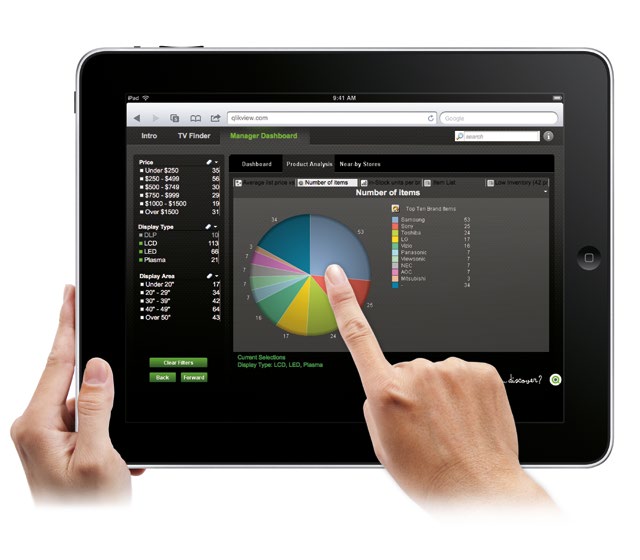
QlikTech is a leader in Business Discovery, the user-driven form of business intelligence. Its QlikView platform bridges the gap between traditional BI and standalone office productivity tools, and the in-memory associative search technology it pioneered lets people explore information freely instead of following a predefined path of questions. More about the company at qlik.com.
More ERP companies than fingers on one hand?
Tell us how many entities you run and what your sales team needs to see, and we will tell you what it takes to bring that into one place.