
How can you reduce data integration costs? 5 practical tips
You can reduce data integration costs by improving data quality, limiting unnecessary customizations, choosing an integration approach that can adapt to future changes, designing your integration architecture carefully, and following proven integration best practices.
→
Real-life benefits of Salesforce-Microsoft Dynamics NAV integration
A couple of years ago, I implemented a CRM system for my former company, and just as I am writing this blog article, I’m in the middle of rethinking my company’s pipeline management strategy and systems. Through these projects, I have realized that developing opportunities can easily be done within Salesforce and other CRM systems because often the process starts there. However in order to deliver great service to your customers in the long term, you need to integrate your ERP and CRM systems.
→
Salesforce ERP integration can be done easily
Salesforce.com is a Cloud CRM solution used by businesses around the world to connect better with their customers and grow. The Salesforce team knows that their users often need to expand Salesforce.com’s capabilities with add-ons or even integrate Salesforce.com with other applications. This can help them get the best results and achieve their business goals.
→
Data stewards: a must for data-driven companies
You have invested much in your systems. Your CRM takes care of your customer-related operations. Your ERP helps your staff handle administrative and operational tasks and control the billing cycle. You may even have a SCM system to streamline your production and supply chain processes. An ecommerce platform may help you sell online.
→
CRM ERP INTEGRATION TO BOOST CUSTOMER SERVICE
Customer service is or should be a priority of all business leaders. Excellence in customer service is a key to long term commercial success.
→
SYSTEM INTEGRATION: CAN YOU AVOID INTEGRATING ERP & CRM?
A simple 5 minutes’ research on Google can show you the endless benefits of data integration. Still, you have not jumped the gun yet. Your ERP and CRM systems still stand as independent systems, without automated integration.
→
Data integration is the future of marketing
Marketing is at the heart of most companies’ strategies. Marketing is the gatekeeper and promoter of a company’s image and reputation. Marketing follows market trends and adapts to them to find new potential customers.
→
DATA INTEGRATION TO SOLVE YOUR GDPR CHALLENGES
Since its adoption in 2016, GDPR has been the topic of many conversations, LinkedIn posts, Google Ads, blog articles and webinars.
→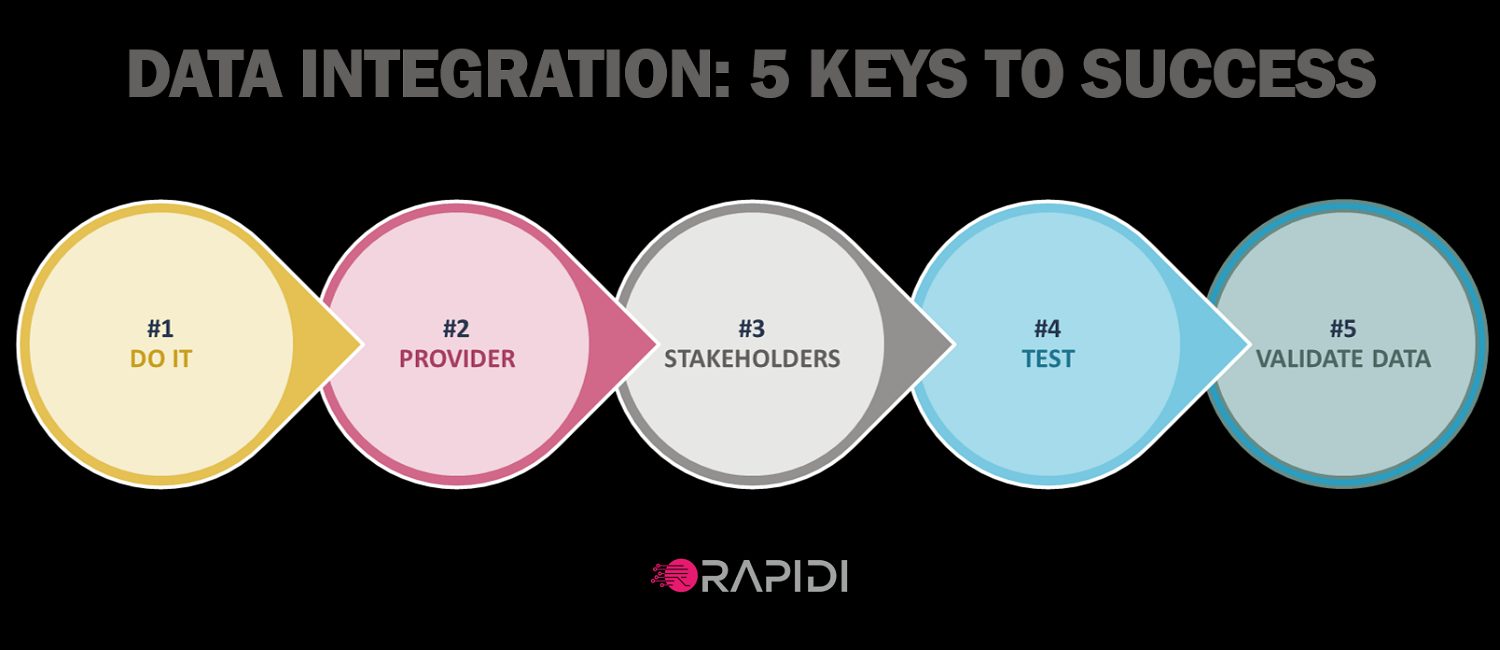
5 keys to data integration success
To learn more about the success of data integration projects, it is important to study the cases of companies that have experienced such success.
→
Can you avoid complex system integration?
Too often, data integration has been associated with complex, slow and frustrating projects, with delays and scary learning and deployment curves.
→
6 signs you really need CRM
After a few decades of existence, there is no doubt that CRM has been a game-changing tool for companies. CRM (Customer Relationship Management) is the biggest software on the market. CRM has helped organizations worldwide focus on relationships with customers, grow faster and work smarter.
→
WHY DATA DRIVEN COMPANIES OFFER BETTER CUSTOMER SERVICE
IT leaders all over the world have a strong focus on providing management with better information. Reliable data empowers business executives to make better decisions.
→
Best way to deal with system integration and system updates
When all your systems work together as one, they support your company processes and your business ambitions in the most optimal way. This is what system integrators can provide you. A good system integrator like RapidiOnline will help you integrate any systems, for example Salesforce with Microsoft Dynamics ERP, or any CRM with any ERP.
→
How to protect the value of your data
Data is a substantial company asset, just like people, time and money. No company should gamble with their data or their data security. Instead, all companies should invest in improving data quality and start fueling this data in their sales processes.
→
The best Salesforce – Microsoft Dynamics NAV integration
Salesforce is the CRM solution that has helped thousands of companies improve and streamline their CRM operations. Likewise, Microsoft Dynamics ERP is the solution of choice for companies that want to streamline their business operations.
→
Software integration: the ultimate Q&A
Data integration and software integration have become much more than buzz words. Integration has become a systematic part of most companies' business transformation plans. This is because people have understood that data transformation and business processes optimization are closely linked.
→
The AI revolution in CRM
If Artificial Intelligence (AI) seemed taken from a sci-fi book a couple of decades ago, it has today become a fact. AI is an integral part of our everyday life. The progress in the domain of machine intelligence has been such that the younger generations have started taking it for granted.
→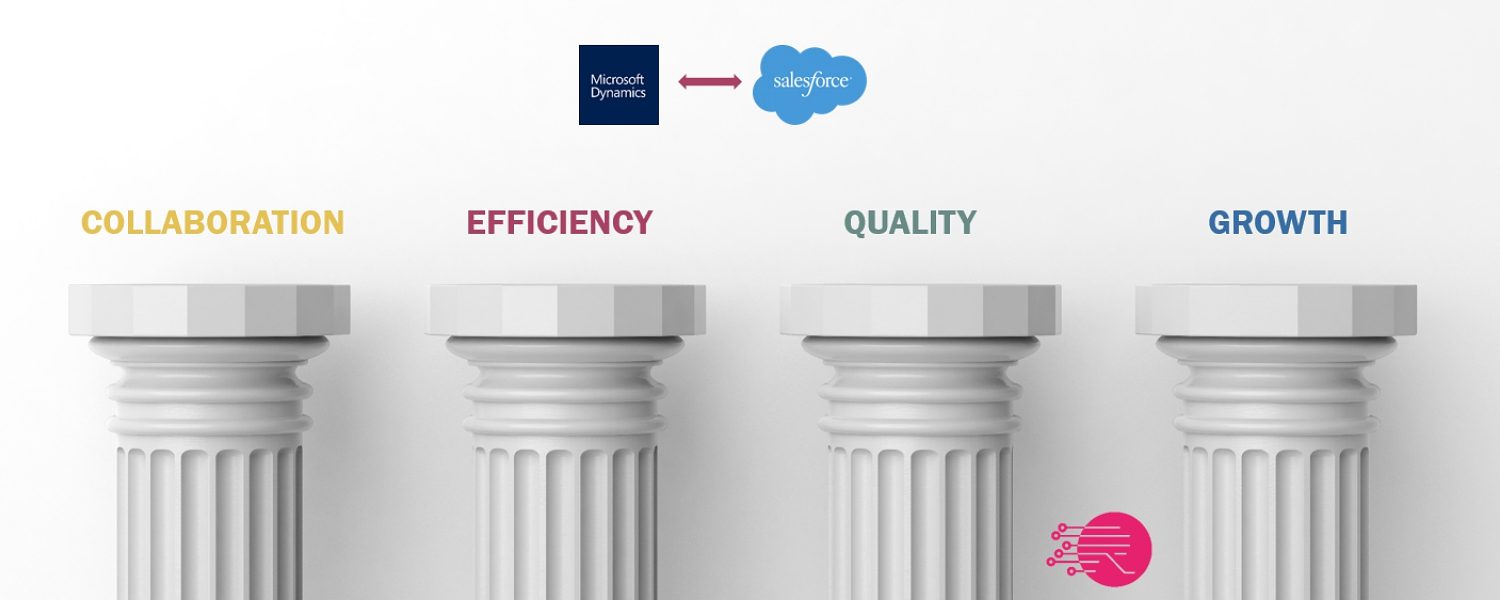
4 pillars of Salesforce-Microsoft Dynamics ERP integration
You may ask yourselves “Why integrate Salesforce and Microsoft Dynamics” – you might even have worked years with these two systems in parallel without any link between them. The obvious answer is “to avoid double data entries”. Eliminating double data entries means that you do not have to key in the same data in multiple systems, and you get that because your systems are integrated. Typically, what you will experience is that with integrated solutions, you also have consistent data. Consistent data is data that you can trust, upon which you can make better business decisions.
→
Advantages of Integrated Systems For Your company
System integration has become a relevant topic for most IT leaders worldwide. Why? Simply because companies have invested in a range of small and large systems to increase productivity and streamline operations.
→
Make Salesforce even more clever
Salesforce is an excellent system. However it does not support all of your company’s functions. You are perhaps using an ERP system (for example Microsoft Dynamics) in parallel to Salesforce to take care of your accounting, your inventory or your fulfilment. Wouldn’t it be great to be able to bring this information into Salesforce, to get everything at one place?
→
How to choose a data integration consultant
Today, companies use an increasing number of data sources. They must control data quality and have a unified view of their data and a good master data management strategy. In the era of big data, integrating systems is often the right solution to keep data in sync, current and valid.
→
How to make your data integration solution robust
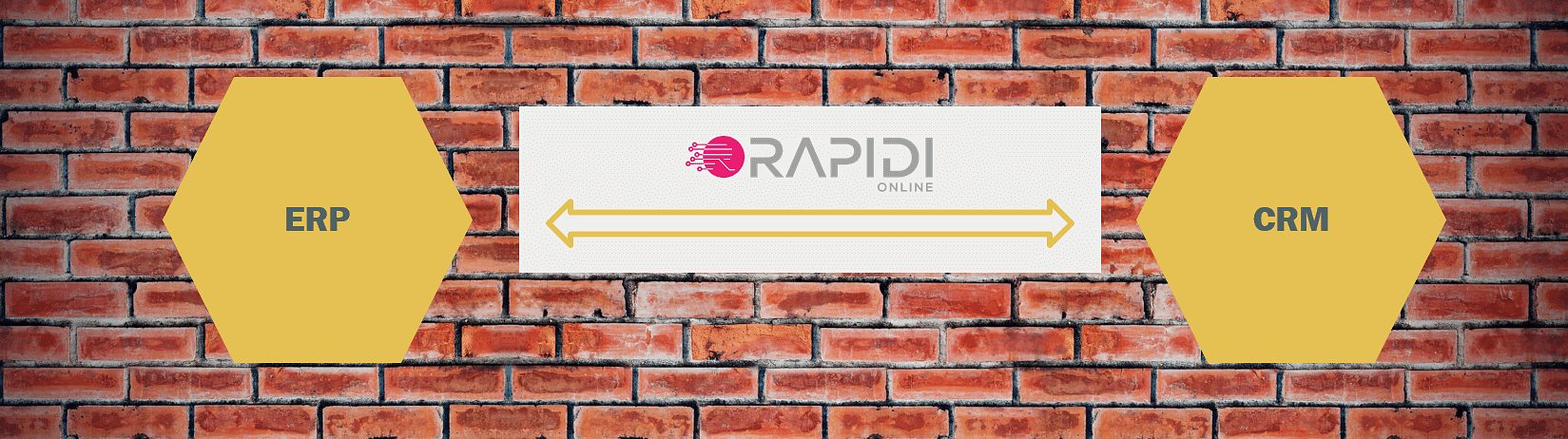
Companies worldwide use specialized systems like ERP, CRM or other data centers to support the necessary process of digitization, globalization or general decentralization of their business processes. If these systems are used as stand alone without any integration, this can create silos of data, which would seriously jeopardize the investment in these systems.
→
Get a step closer to your customers with ERP-CRM integration
How many efforts do your salespeople make every day to know their clients better? I’ve spent most of my career in sales, both as sales guy and as sales director. Along the years, I have had the opportunity to observe many interactions between salespeople and their clients. One thing that has always been striking me is that, often, the little things we do in an effort to get closer to our clients are those that make a huge difference in our relationship with them and eventually in their likelihood to purchase our products or services. In my experience, turning the vendor-customer relationship into a partnership is the most efficient sales approach.
→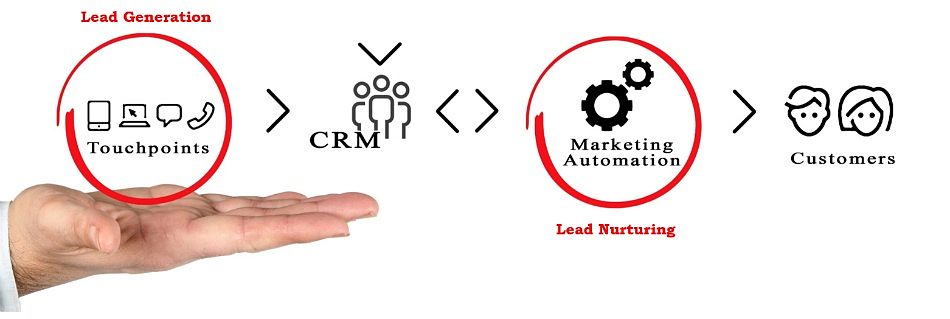
What to do with cold leads – or the wonders of lead nurturing
The biggest challenge of marketers today is not necessarily about lead generation. In the past decades, it has become easier for organizations to attract new potential customers online. The internet has drastically changed the purchasing behavior, allowing people to find information, compare and analyze various offerings by themselves. Many companies have understood that investing in analytic and SEO optimization tools can help increase lead generation exponentially.
→
BEST SALESFORCE - MICROSOFT DYNAMICS AX INTEGRATION
If you have invested in top rated CRM and ERP systems such as Salesforce and Microsoft Dynamics AX, you need the two systems to be in sync. This will allow you to get the most out of your investment. But do you know how to choose the best Salesforce - Microsoft Dynamics AX integration?
→
Integrated systems keep trucks and trailers moving (case story)
What do you do when you want to improve your sales process but are limited by the data silos in your company? Finding a way to eliminate the data silos is a good place to start, but how do you do it? This is exactly the situation that one of our customers, idem telematics, was facing before they got in touch with us.
→
MS Dynamics CRM vs Salesforce
Microsoft Dynamics and Salesforce are two of the most popular CRMs around, and there is a longstanding rivalry between them. Both systems allow users to pick and choose the modules they need, or to buy the whole package. They both offer very similar features, like account management and sales forecasting.
→
How never to lose a prospect: the promise of lead nurturing
Have you ever felt that you do not get enough out of the pipeline your marketing activities generate? Know the feeling? Some time ago, I had a look into our Salesforce and started to analyze what goes wrong, where and how it can be improved. I quickly identified some areas of interest that can be easily solved with the right effort. This blog is about how to get the most out of your lead generation effort.
→
Get the full benefits of Salesforce Sales Cloud Lightning
You have probably already heard about Salesforce Sales Cloud Lightning and know that it is designed around the way you want to sell, and put data where you need it. But did you know that you can experience a lot of new benefits by combining this new user experience with a data integration tool such as RapidiOnline and thereby bringing data from other complementary systems into Salesforce?
→
How to integrate Accounts and Contacts between Salesforce and Microsoft Dynamics?
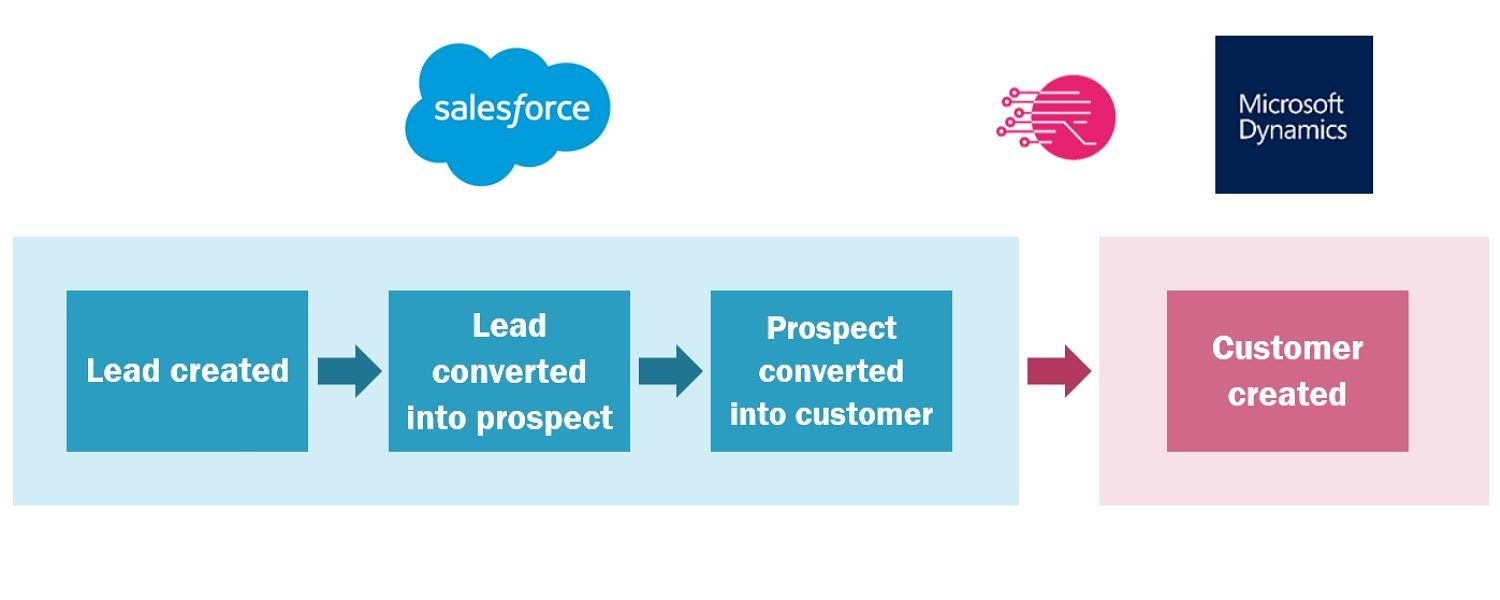
How difficult can it be to integrate accounts in Salesforce with customers in Microsoft Dynamics (or any other ERP system for that matter)? Not that difficult at first glance, you might say. And I tend to agree. See, a typical flow around account creation looks like this in your Salesforce CRM and Microsoft Dynamics ERP systems:
→
Best Microsoft Dynamics GP - Salesforce integration
Microsoft Dynamics GP (formerly known as the Great Plains ERP solution) is widely used and its installed base is spready out throughout many countries in the world. Companies using Dynamics GP often need a CRM system to support their sales and marketing efforts and optimize customer relationships and business processes.
→
When you think you are forced to upgrade your ERP and then this happens...
Everybody running an ERP system is at least once a year asked if they want to upgrade their system. On the one hand you may be tempted to do so as you would like to take advantage of the new features, but the benefits have to exceed the total price of upgrading. And the price for an ERP upgrade, together with the risk of negative impact on the business during the upgrade process onboarding the new version, often prevents organizations from doing this yearly update. Luckily.
→
Is MS Dynamics CRM the only wise choice when you have a Dynamics ERP?
Many companies across the globe are using an ERP solution to improve the efficiency of processes across their businesses – from accounting to warehouse to inventory to fulfillment. When they have reaped the benefits that an ERP solution can give them, they soon get interest in a CRM solution to complement their ERP and bring them a new focus on customer-relationship processes and data.
→
What is data integration? 12 definitions to get a better understanding
In the past few years, the volumes of data used by organizations has grown exponentially. Let’s face it: it has become vital for organizations to understand their data sets and organize them. In parallel with this phenomenon, a new series of data integration disciplines have developed with a whole new jargon: data migration, data warehousing, data synchronization, big data and business intelligence (just to name a few) have become such a hype. What is data integration really? I have put together a glossary of the most common data integration terms for a while... Here it is.
→

Integrating with Dynamics 365 for Finance & Operations: dealing with missing timestamps
Anyone who has tried to make a data integration with Microsoft Dynamics 365 for Finance and Operations has met the obstacle, that the system does not support timestamp. That makes it troublesome to identify new and modified data. There are several ways to solve this.The problem is that if you don't want to transfer an entire table every time you want data synchronized, then you need a way to detect, which data is modified or added.
→
Why integrating your ERP and CRM systems is an absolute must (case story)
“I would never go back to a world of not having this integration”… this was the overwhelmingly positive feedback one of my customers gave me during a follow-up call. See, when we have performed a system integration for a client, I like to schedule a call where we go through what has been good, what has been challenging, and any way we can improve. That allows me to check that we have delivered on our promises, and if not, make sure that we can take actions to satisfy a potentially frustrated client.
→
Do you need real time data integration?
Most of the IT executives that are looking for a data integration system want to have real time integration. While it is often what they want, it is rarely what they need.
→
Salesforce or Microsoft Dynamics 365 CRM: best choice?
What is the best Customer Relationship Management (CRM) tool in 2020? Is it different from 2019? How can you select the best CRM solution for your company? Many of the companies that are using Microsoft Dynamics as their ERP are wondering if Microsoft Dynamics 365 CRM is the best solution for them, or if they should select another of the proven CRM software available, such as Salesforce or NetSuite. Websites such as Capterra provide detailed software comparisons, including for CRM solutions. For example, if you are wondering how NetSuite and Salesforce compare, you can have a look here.
→
How long does it take to integrate Salesforce with Microsoft Dynamics?
All people that have been looking into any Salesforce-ERP data integration project have been asking themselves this question: how long will it take? And the answer is obviously “it depends”. But all in all, integrating Salesforce with Microsoft Dynamics ERP can be done pretty fast using RapidiOnline.
→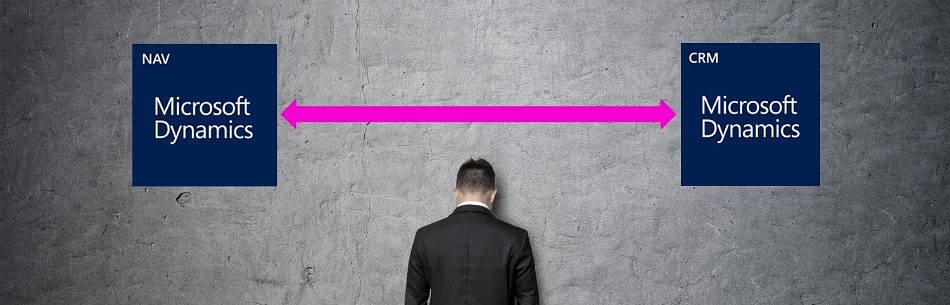
Microsoft Dynamics NAV – CRM integration: native connector vs data integration platform
Anyone who has been following the struggles to successfully integrate Microsoft Dynamics NAV (NAV) and Microsoft Dynamics CRM since Microsoft Dynamics CRM was released in 2003 (at that time branded “Microsoft Business Solutions Customer Relationship Management 1.0) knows that it has been uphill to integrate the two systems with the standard integration. First there was no integration at all. Some partners tried to make a connector but the first many years, it was unstable and not generic enough.
→
How to Connect Salesforce with Microsoft Dynamics
When you connect Salesforce with Microsoft Dynamics, you share data between the two systems. This makes it simple for you to communicate with your customers, enable your teams to work together more effectively and achieve your business goals. The easiest way to connect Salesforce and Microsoft Dynamics is via RapidiOnline.
→
How to integrate Salesforce with Microsoft Dynamics NAV?
Are you tired of looking for information in multiple systems to service your customers? Would you like to remove double data entries? Do you want to provide your staff with data they can trust? Wouldn't it be wonderful to have your Salesforce quotes automatically transferred to Microsoft Dynamics NAV as new orders? A Salesforce - Microsoft Dynamics NAV integration solution can solve these pains for you. Data integration projects have the reputation to be long, cumbersome and expensive. Some say data integration can put your data at risk. Many data integration solutions can allow you to integrate with Salesforce or to integrate with Microsoft Dynamics NAV. In fact, integrating Salesforce with Microsoft Dynamics is much easier than most people think.
→
Do you need both ERP and CRM? A close look with Rapidi
Do you absolutely need to have both ERP (Enterprise Resource Planning) and CRM (Customer Relationship Management)? Isn’t it enough to use just one of them? As a stakeholder in a business, you're best placed to understand the value you get from ERP and CRM systems, and whether you need both of your current solutions.
→
5 best kept secrets of Salesforce-MS Dynamics integration
When you want to integrate Salesforce with Microsoft Dynamics ERP (whether it is AX, GP, NAV, 365 Business Central or 365 for Finance and Operations), you want to work with the experts. The keys to the success of your project lie in the details and the full understanding of the systems you integrate.
→
RapidiOnline, supporting Xsens’ data integration needs for over a decade
Xsens, a leader and innovator in the field of 3D motion tracking technology and products, has been using RapidiOnline for ten years, with great success. Xsens originally considered single-vendor solutions for their ERP and CRM needs, such as SAP. But even though these tools can be very powerful, they also tend to be more expensive, and less flexible. Instead, they chose to implement Salesforce and connect it to their Microsoft Dynamics NAV, using RapidiOnline – which they did with great success and did not regret. 10 years later, even after a significant upgrade to Microsoft Dynamics NAV 2018 and a changes to Salesforce due to new NAV capabilities, they are still RapidiOnline fans.
→
Bad data issues? Solve them with data integration
Bad data can completely undermine your sales efforts. Research from Experian Data Quality has shown that the average company loses 12% of its revenue as a result of inaccurate data. 95% of organizations see negative impacts from poor data quality, resulting in wasted resources and additional costs, ineffective business initiatives, poor customer experience, delayed data migration projects, and much more.
→
Why Data Integration is Key to Work Process Improvement
Where on your to-do list is data integration, and do you see it as important to work process improvement?Maybe you feel that it would be useful, but it’s not really essential. You’ll get around to it, but you’ve got other priorities for your time and budget right now. Plenty of business owners feel that way. And that’s understandable. After all, you’re getting by OK now without it. Things could sometimes run a little smoother, sure. But how much difference could data integration really make?
→
3 steps to get started with your Salesforce – MS Dynamics ERP integration
When you first started using salesforce.com and Microsoft Dynamics in your business, you probably found that using those systems made running your business much easier. But as your business grows, using systems like these in isolation from each other can actually start to make life more complicated. As different teams collect, record and use data in different ways, it’s hard to know how to make systems work together. The answer is a Salesforce ERP data integration. This simple integration allows you to bring together all the vital data you need in one place from Salesforce and your ERP. No more worrying about how to share information between teams, no spending hours copying data manually and no mistakes. Just real-time, automated sharing.
→
The future of Salesforce-Microsoft Dynamics integration
During Dreamforce 2016 I had a mission to understand how the future integration needs of companies will evolve in the next 2-3 years and what impact this evolution will have on their integration strategy. Analyzing the various sources of opinions regarding future integration needs, it came out as a pretty consistent picture.
→
Salesforce-MS Dynamics integration - Live Demo
Is it easy to integrate Salesforce with Microsoft Dynamics? It can definitely be! A system like RapidiOnline offers a no-programming, simple and fast integration option that can be used ‘out-of-the-box’, or customized and scaled to fit almost any business in a matter of days. Interested in learning more? Want to see how it works? Watch this video...
→
Boosting sales with Salesforce - NAV integration (case story)
World leader in technical embroidery, ZSK Embroidery Machines needed an upgrade of the IT tools available to their sales team. The company already had a Microsoft Dynamics NAV installation that could be used by the sales team... with effort. Since Sales Reps didn't have access to NAV they had to phone or e-mail someone on the Finance team to get the data or reports they needed. Today, they have implemented Salesforce and RapidiOnline and can report that their sales team gets more information than ever before. They are very close to a true 360 degree view of each customer.
→
All you ever wanted to know about Salesforce - Microsoft Dynamics integration
Can data integration really help you optimize processes between your Salesforce and your Microsoft Dynamics? Which processes? Can it get you a step closer to your customers and help you reach your sales goals? Can’t you successfully operate with stand-alone, isolated systems?
→